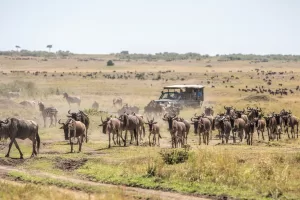
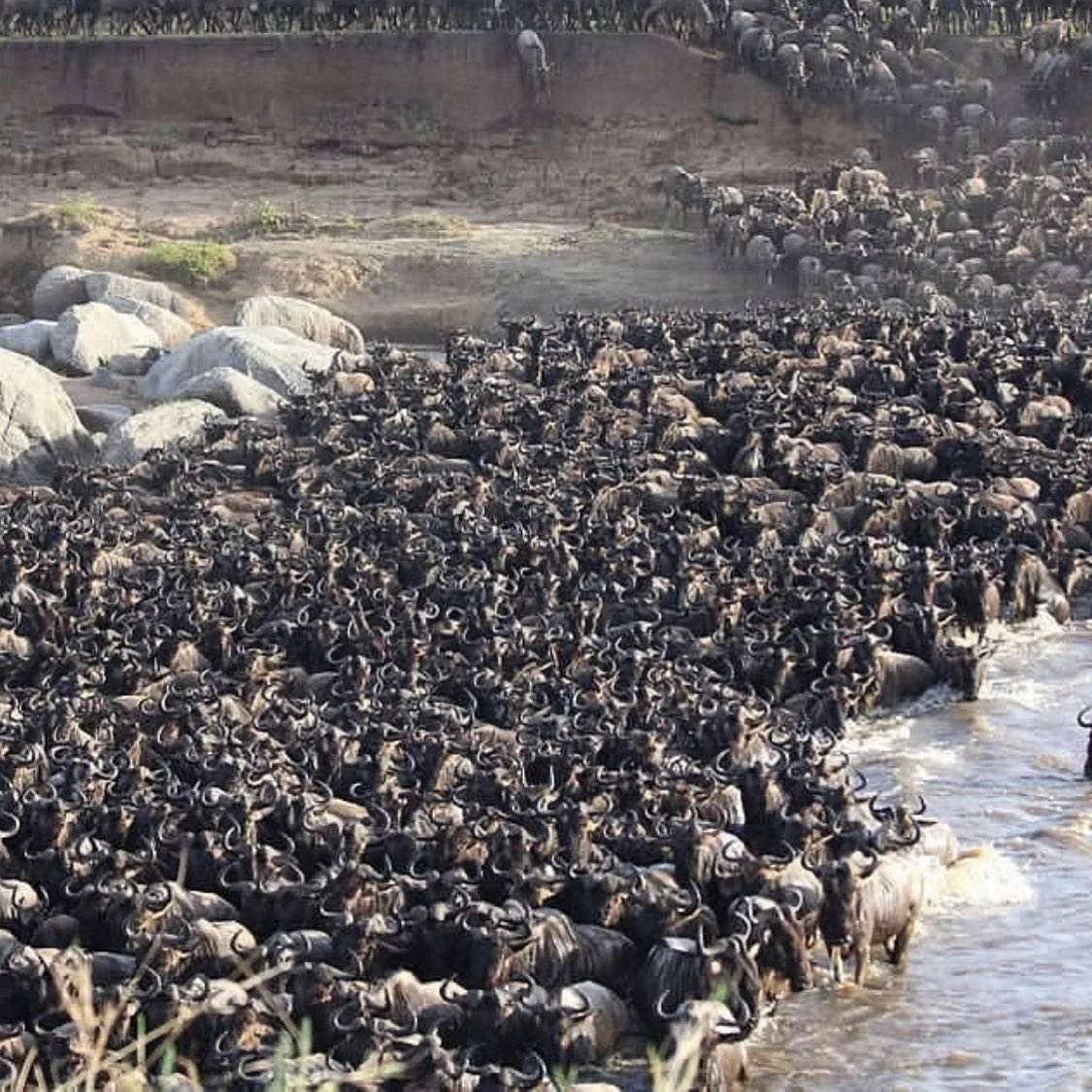
Witnessing the Great Migration is one of the most extraordinary wildlife experiences on Earth, attracting travelers from around the world to Tanzania. This natural spectacle involves over two million wildebeest, zebras, and gazelles moving in a continuous cycle across the plains of the Serengeti National Park and into Kenya’s Maasai Mara. Understanding when and where to go is essential for maximizing your chances of seeing the most dramatic moments of this incredible journey.
January – March: Calving Season in Southern Serengeti
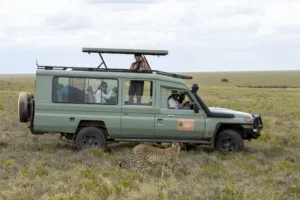
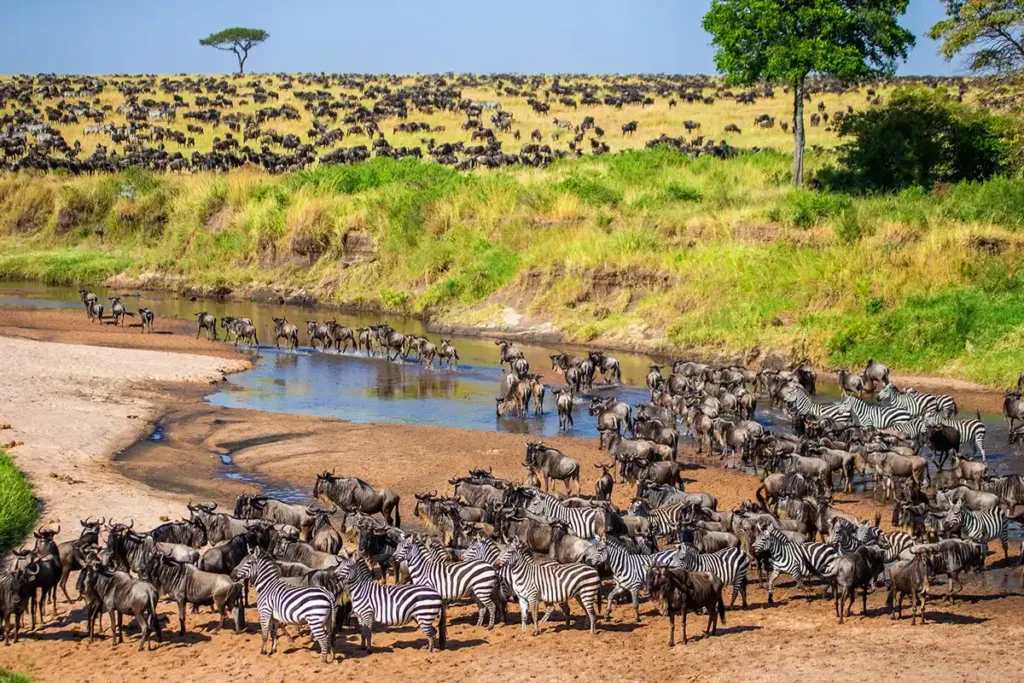
Witnessing the Great Migration during the early months of the year offers a completely different experience focused on new life. From January to March, the herds gather in the southern plains of the Serengeti and the Ndutu Area, where thousands of calves are born every day. This period is ideal for seeing predator-prey interactions, as lions, cheetahs, and hyenas are highly active. The landscape is lush and green, making it a perfect time for photography and a quieter safari experience with fewer crowds.
April – May: The Green Season & Herd Movement
During April and May, witnessing the Great Migration becomes more about the journey than dramatic crossings. The herds begin moving northwest as the rainy season transforms the plains into a vibrant green landscape. Although this period sees fewer tourists due to occasional rain, it offers excellent value, fewer vehicles, and beautiful scenery. Wildlife is still abundant, and this is a great time for travelers seeking a more peaceful safari experience.
June – July: Grumeti River Crossings
One of the most exciting times for witnessing the Great Migration is between June and July, when the herds reach the western corridor of the Serengeti and face the Grumeti River. These crossings are dramatic, with crocodiles waiting in the water and herds gathering courage before crossing. This period marks the beginning of peak safari season, offering a balance of action and accessibility.
July – October: Mara River Crossings (Peak Season)
For many travelers, witnessing the Great Migration is all about the famous river crossings, which occur from July to October along the Mara River in the northern Serengeti. This is the most dramatic phase of the migration, where massive herds plunge into crocodile-filled waters in a fight for survival. It’s also the busiest time of year, so booking in advance is essential. The combination of high wildlife density and intense action makes this the most sought-after safari period.
November – December: Return to the South
As the short rains begin in November, witnessing the Great Migration shifts again as the herds start their journey back to the southern Serengeti. This transitional period offers a mix of movement, fewer crowds, and excellent wildlife viewing. By December, the herds are returning to the southern plains, completing the cycle and preparing for another calving season.
Best Places to See the Great Migration
Choosing the right location is just as important as timing when witnessing the Great Migration. The southern Serengeti and Ndutu region are best for calving season, while the western corridor is ideal for Grumeti crossings. The northern Serengeti is the top destination for Mara River crossings, offering some of the most iconic safari moments in Africa.
Pro Tips for Witnessing the Great Migration
- Book your safari 6–12 months in advance for peak season (July–October)
- Choose mobile camps that follow the migration for better sightings
- Combine different regions of the Serengeti for a complete experience
- Travel with an experienced guide to track herd movements
Final Insight
Witnessing the Great Migration is not about a single moment—it’s about understanding the rhythm of nature across the Serengeti ecosystem. Whether you visit during calving season or river crossings, each phase offers a unique and unforgettable experience. With the right timing and location, your safari in Tanzania will become a story you carry for a lifetime.